This article is for general information only. It is not medical advice, and it cannot confirm or rule out autism or ADHD in any child. Only qualified clinicians can assess and diagnose neurodevelopmental conditions. If you are concerned about a child, speak to your GP, school SENCO, or another appropriate professional.
We were referred for ADHD assessment in Year 3. Eighteen months later, we still had no appointment date. The student attends our centre twice a week, but without formal guidance we were guessing how to adapt his drill programme and feedback.
Across England, growing numbers of tutors, centre managers and GPs are describing students as having suspected autism or attention deficit hyperactivity disorder (ADHD) long before a formal diagnosis is confirmed, or while no diagnosis is ever given. That in-between period matters: it shapes how a student is supported in tutoring sessions, how centres adapt drill programmes, and how much strain falls on tutors who were never designed for multi-year diagnostic delays.
What "suspected" means in practice
In NHS data, a child may appear on a waiting list with an open referral for suspected autism, meaning a clinician has been asked to assess whether autism explains a child's difficulties, but the pathway has not yet reached a diagnostic conclusion.1 ADHD follows a separate assessment route, often through community paediatric or child and adolescent mental health services (CAMHS), and is recorded differently in national statistics.
"Suspected" is not a diagnosis. It signals that professionals or families see patterns, for example in communication, sensory responses, attention, impulsivity or hyperactivity, that warrant specialist assessment. National Institute for Health and Care Excellence (NICE) guidance recommends that the diagnostic assessment process for autism should begin within three months of referral,4 but published waiting-time data show that many children wait far longer for a first appointment, let alone a completed assessment.
How common are autism and ADHD among children?
Population studies suggest autism affects at least around 1% of children in the UK, though measured prevalence has risen over time as awareness, referral routes and diagnostic practice have changed.5 ADHD is commonly estimated at roughly 3–5% of school-age children worldwide in epidemiological literature; UK clinical and administrative counts depend on how diagnosis is recorded.9
Demand for assessment has risen sharply. Nuffield Trust analysis of NHS autism referral data shows that among 0–17-year-olds in England, the rate of referrals per 100,000 population more than doubled between January 2022 and December 2024 (from 397 to 1,077 per 100,000).3 That surge is one reason why "suspected" caseloads, children known to need assessment but not yet through the system, have become a defining feature of primary-school-era neurodevelopmental care.
When autism and ADHD overlap
Autism and ADHD frequently co-occur. NICE's evidence review for autism in under-19s notes that children and young people with ADHD are more likely to have autism than those without ADHD, and recommends that clinicians consider joint assessment when signs could fit either condition.4
Pooled research cited in NICE guideline development found ADHD in about 45% of children with autism (95% confidence interval 24–67%) in studies of coexisting conditions.6 A separate meta-analysis reported ADHD symptoms in roughly 21% of young people with ADHD samples also meeting autism criteria in community and clinical settings, with higher rates in clinical samples.9 In plain terms: a child referred for one condition often needs clinicians to think about both.
Overlap creates practical challenges. Attention difficulties can mask social communication differences, and autistic traits can be mistaken for inattention. Families may receive conflicting advice; schools may implement strategies suited to one profile while the child's needs reflect both. NICE guidance on managing autism in children also notes that a large majority of autistic young people meet criteria for at least one additional mental health or behavioural condition, which further complicates support planning.5
Assessment waiting times: the scale of the backlog
NHS England's experimental autism waiting-time statistics illustrate the pressure on diagnostic pathways. In December 2024, there were 212,964 patients with an open referral for suspected autism. Of those whose referral had been open at least 13 weeks, only 4.6% (8,889) had received a first care contact within the recommended 13-week window.1
Nuffield Trust reports that by December 2024, among people whose autism referral had been open for more than 13 weeks, about four in five had no recorded first appointment, which suggests waits are lengthening rather than clearing.3 These figures cover all ages in the dataset; children and young people account for a large share of rising referral rates.3
For children specifically, the Children's Commissioner for England analysed NHS community and mental health service data for 2022–23 and 2023–24. The report estimates average waits from referral to diagnosis of about two years and two months for autism in community health services, and about two years and five months for ADHD, with somewhat shorter averages in mental health services.2 Lord Darzi's 2024 NHS investigation similarly highlighted surging waits in community and mental health services, noting that children make up a large proportion of those waiting more than a year.2
During those waits, families often describe a vacuum: the student is struggling, the centre needs guidance on adapting sessions, but there is no formal diagnosis to anchor specialist referrals or to unlock some funded support. GPs and paediatricians may offer interim advice, but tutoring staff are frequently left supporting students without clarity on needs or entitlements.
Pressure on schools and SEND provision in England
While NHS pathways stall, schools carry day-to-day responsibility for inclusion. Department for Education (DfE) data show that in the 2023/24 academic year, 17.1% of pupils in state-funded primary schools had either an EHC plan or SEN support: about 3.0% with an EHC plan and 14.1% on SEN support without a plan.7 Overall, more than 1.6 million pupils in England had identified special educational needs, continuing a multi-year upward trend.7
DfE's August 2024 compendium reports that among pupils with EHC plans, autistic spectrum disorder was the most common primary type of need (about 132,200 pupils, roughly 33% of those with plans in January 2024).8 Most pupils with SEN remain in mainstream schools: around 81% of pupils with SEN were in state-funded mainstream settings in 2024.8
For tutors and centre managers, the challenge is structural as well as individual. A student with suspected autism or ADHD may need shorter drill blocks, sensory breaks, predictable routines, or reduced working-memory load in written practice — but without a diagnosis, access to some funded support is uncertain. Centres can still adapt programmes using what they observe in session, yet tutor time, training and access to educational psychologists are finite.
Impact on learning, including mathematics
Neurodevelopmental differences are not academic verdicts: many children with autism, ADHD, or both thrive with appropriate support. But research does identify patterns that matter in primary classrooms, especially for mathematics.
Attention and executive function. ADHD is widely associated with difficulties in working memory, inhibition and cognitive flexibility: processes involved in following multi-step methods, holding intermediate results, and ignoring irrelevant information.10 A 2024 study of a mathematics intervention for low-attaining primary pupils found that inattention symptoms predicted smaller learning gains over time, even in a one-to-one digital setting where distraction could be managed.10
Working memory more broadly. Research on children referred for attention, learning or memory difficulties found that working memory performance correlated strongly with reading and mathematics scores, and that three-quarters of children with low scores in both subjects had at least one working memory score in the deficit range.11 For children with ADHD, reviews suggest working memory deficits are present in a large majority and are closely tied to academic underachievement in mathematics.12
Autism and mathematics. Studies comparing autistic preschoolers with typically developing peers have found differences in mathematics and cognitive profiles; for autistic children, domain-general working memory has been identified as a key predictor of mathematics ability in some samples, whereas approximate number sense played a larger role for typically developing children.13 Other research documents specific difficulties with mathematical word problems among autistic pupils relative to peers.13 Heterogeneity is important: autistic pupils are not a single group, and cognitive strengths (for example in pattern recognition or systematic thinking) are common.
Why this matters for suspected cases. A student awaiting assessment may still experience these cognitive demands daily. Timed drill sheets, noisy centre rooms, unclear instructions, or practice that is not marked promptly can disproportionately affect students with attention or sensory needs, whether or not a diagnosis is eventually confirmed.
Fast, accurate feedback on drill work helps errors get corrected while they still matter, particularly for students whose attention or working memory is already under strain.10 That does not replace a specialist assessment or session adjustments, but it removes one avoidable barrier to learning that centres can address in their marking workflow.
What helps while families wait for answers
Clinical pathways can take years. Tutoring centres cannot fix that, but managers and tutors are not powerless in the gap. The tactics below draw on NICE guidance, SEND practice, and research on attention and working memory — adapted for centre drill programmes and marking feedback, not generic checklist advice.
A week on the waiting list. Consider a situation that plays out in centres across England: a Year 4 student is referred for ADHD assessment in autumn. By spring, no appointment date has arrived. He completes six column-addition questions correctly, then misreads the operator on question seven and abandons the sheet. His tutor has three students in the next block; the centre has no formal guidance on how to adapt his drill programme. That limbo is what this section is trying to shorten.
- Build a one-page "what helps now" profile for each student. List what actually works in your centre: how instructions need to be given ("show me first, then I try"), where the student sits, how long they can focus before a break, and what triggers shutdown. Share it with every tutor who sees them. You do not need a diagnosis for reasonable adjustments, and a single page is easier to act on than a long email chain.
- Document progress before the label arrives. Track termly targets in writing (for example: "complete four column-addition problems with a number line visible"). If needs escalate later, that record supports family conversations with school SENCOs and EHC needs assessment applications far more than a vague sense that "something is wrong."
- Reduce maths working-memory load in drill programmes on purpose. Research on students with attention and memory difficulties finds that working memory scores correlate strongly with mathematics attainment, and that most students struggling in both reading and maths show at least one working memory score in the deficit range.11 In practice: cap written drill practice at four to six questions per page, keep a worked example beside each new problem type, offer a number line or hundred square, and avoid timed conditions until anxiety is manageable.
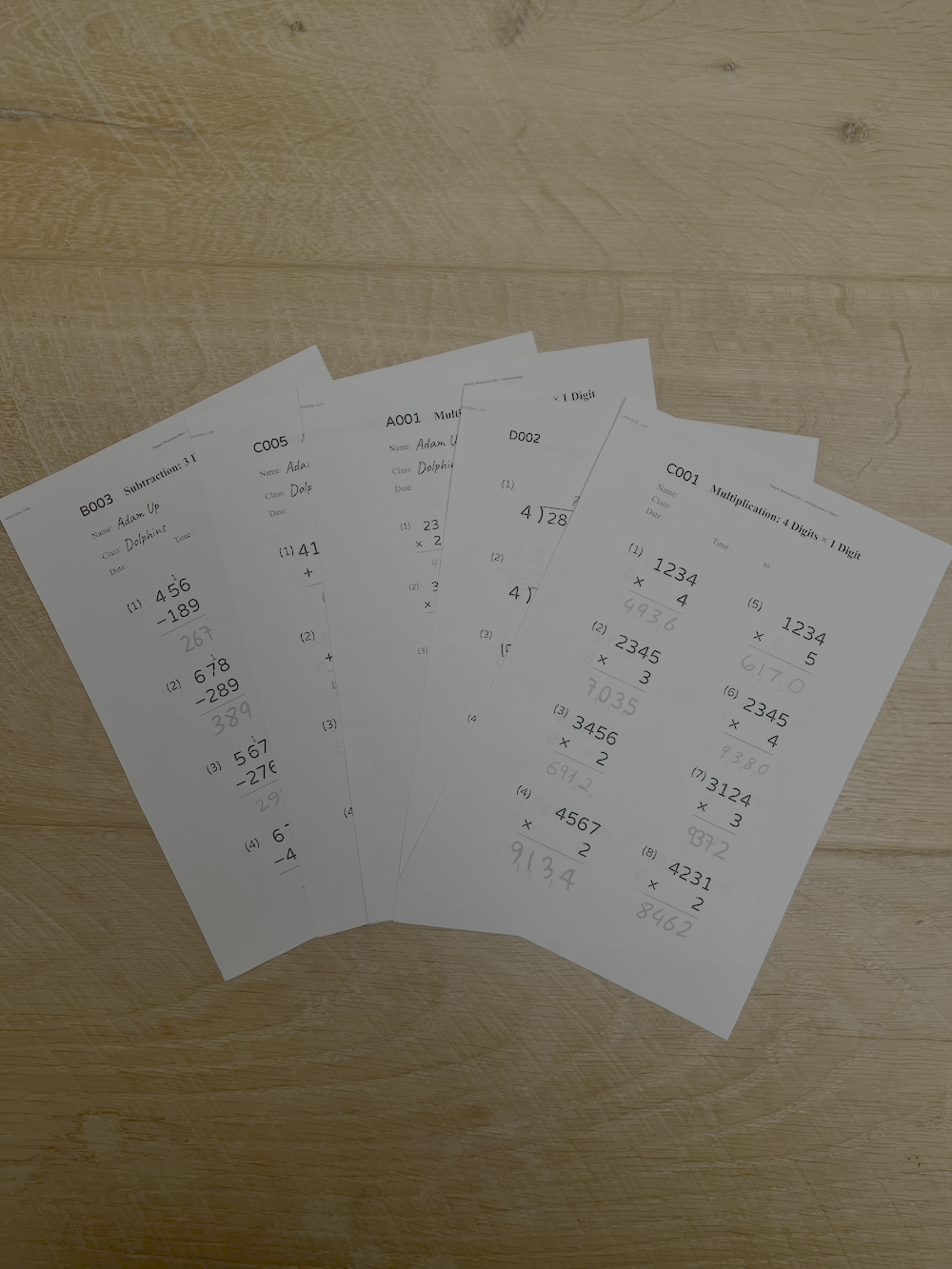
- Close the feedback loop within the session. When drill sheets sit unmarked until the end of the day, a student cannot connect the mistake to the method. A 2024 study of primary maths intervention found that inattention symptoms predicted smaller learning gains over time, even where distraction was controlled.10 Same-session review (even ten minutes: "which two did you find hardest, and why?") beats a perfect weekly session that never happens — and fast scanning makes same-session marking feasible at centre scale.
- Ask whether both autism and ADHD are in view. NICE recommends that clinicians consider joint assessment when signs could fit either condition, because the two frequently overlap.4 Encourage families at their next GP or paediatric contact to ask explicitly: "Could this be both?" It can prevent another year of centre strategies aimed at only half the picture.
If a student's needs are escalating — for example through persistent school refusal, self-harm, or severe behaviour that puts them or others at risk — urgent clinical pathways exist and should be accessed through GP or CAMHS crisis routes, not only through routine diagnostic waiting lists.
Mark drill sheets fast, teach the rest of the session
redmarker ticks routine answers in seconds so tutors can spend session time on the questions that actually need a conversation.
Key takeaways
- Suspected autism or ADHD means a referral is active or concerns are recognised, not that a diagnosis is confirmed.
- Referral demand has surged in England; autism waiting-time data show very long delays to first contact for many children.13
- Autism and ADHD often overlap; NICE advises clinicians to consider both when either is suspected.4
- Tutoring centres can adapt drill programmes now — shorter blocks, reduced working-memory load, same-session marking — without waiting for a formal diagnosis.
- Maths learning can be affected by attention and working memory difficulties; fast marking on drill sheets removes one avoidable barrier while families wait for assessment.
The system-wide fix (adequate diagnostic capacity, joined-up NHS and education funding, and timely access to specialists) is beyond what any individual centre can deliver alone. Understanding the scale of the challenge — and adapting drill programmes and marking feedback in the meantime — is a first step toward supporting students who are waiting too long for answers.
References
- NHS England (2025). Autism Statistics, January 2024 to December 2024. NHS England Digital. digital.nhs.uk/.../january-2024-to-december-2024
- Children's Commissioner for England (2024). Waiting times for autism and ADHD assessments for children and young people in England. October 2024. childrenscommissioner.gov.uk (PDF)
- Nuffield Trust (2025). Access to services for autism and ADHD. nuffieldtrust.org.uk
- NICE (2021, updated). Autism spectrum disorder in under 19s: recognition, referral and diagnosis (NG128). Rationale: factors associated with increased prevalence. nice.org.uk/guidance/ng128
- NICE (2013, updated). Autism spectrum disorder in under 19s: support and management (CG170). Full guideline evidence on prevalence and coexisting conditions. nice.org.uk/guidance/cg170
- National Institute for Health and Care Excellence (2012). Autism: recognition, referral and diagnosis of children and young people on the autism spectrum. Evidence review on coexisting ADHD prevalence (pooled estimate 45%, 95% CI 24–67). ncbi.nlm.nih.gov/books/NBK92989
- Department for Education (2024). Special educational needs in England, Academic year 2023/24. Explore education statistics, published 20 June 2024. explore-education-statistics.service.gov.uk
- Department for Education (2024). Special educational needs and disability: analysis and summary of data sources. August 2024. gov.uk (PDF)
- Romero-Ayuso, M., et al. (2020). Guidance for identification and treatment of individuals with ADHD and autism spectrum disorder based upon expert consensus. BMC Medicine, 18, 124. link.springer.com
- Kanevski, L., et al. (2024). Inattention negatively moderates the effectiveness of a mathematics intervention in low performing primary school students. Frontiers in Education, 9, 1276741. frontiersin.org
- Alloway, T. P., et al. (2016). How common are WM deficits in children with difficulties in reading and mathematics? Learning and Individual Differences, 52, 108–114. PMC5198752. pmc.ncbi.nlm.nih.gov
- Singh, S., et al. (2025). Examining the roles of working memory and trait anxiety on math achievement in children with ADHD. ADHD Attention Deficit and Hyperactivity Disorders. PMC11926614. pmc.ncbi.nlm.nih.gov
- Chen, X., et al. (2022). What ability can predict mathematics performance in typically developing preschoolers and those with autism spectrum disorder? Journal of Autism and Developmental Disorders. PubMed 35113327. pubmed.ncbi.nlm.nih.gov